After the close, in ten pictures
You bought a platform company in one trade and plan to add more. Here is how the work after close goes: where the hours and the margin are, what to do first, and where it gets expensive.
-
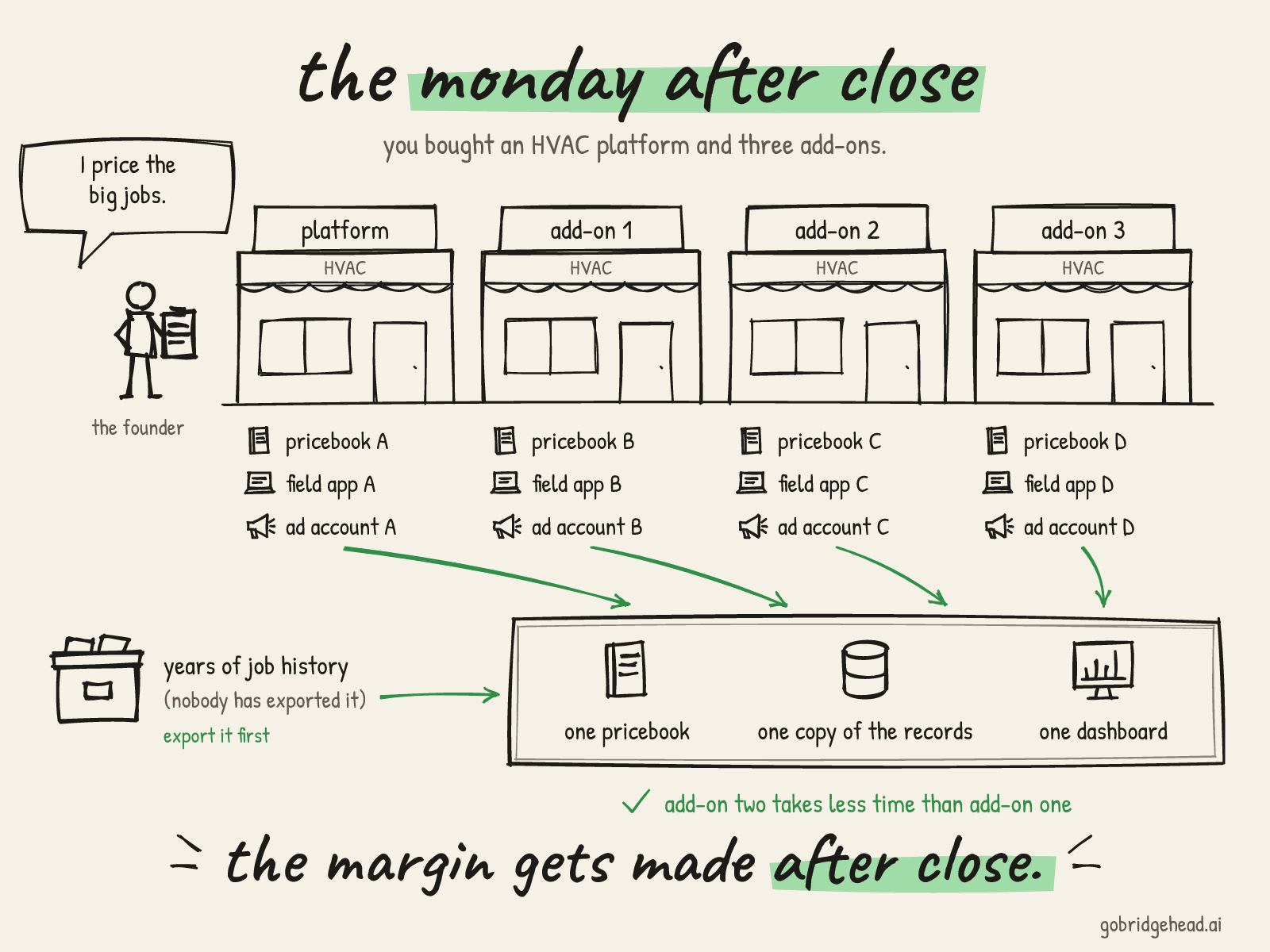
1 The Monday after close
Each of these companies ran fine on its own for years. The work is joining them up while the people who know how each one runs are still there.
-
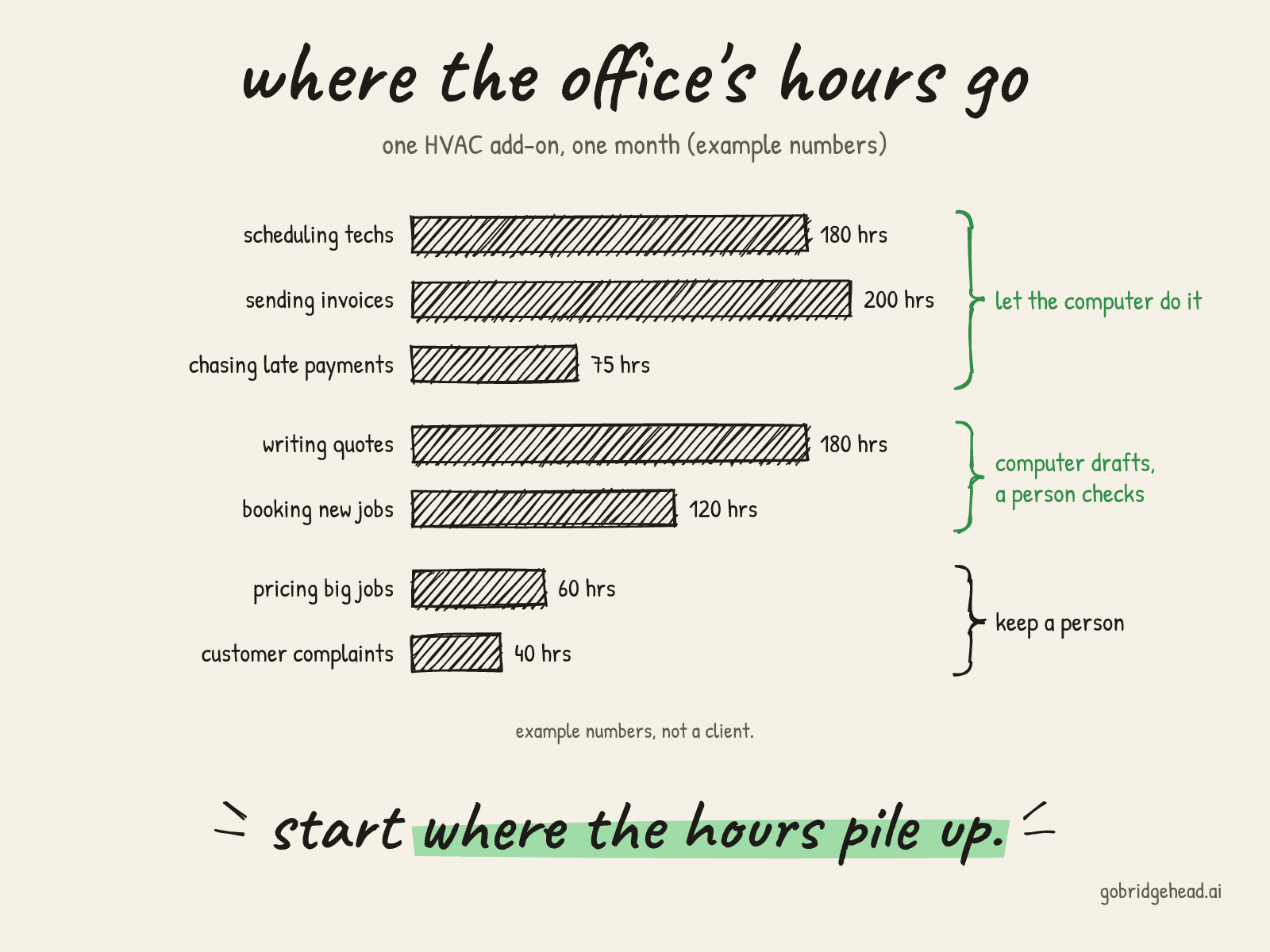
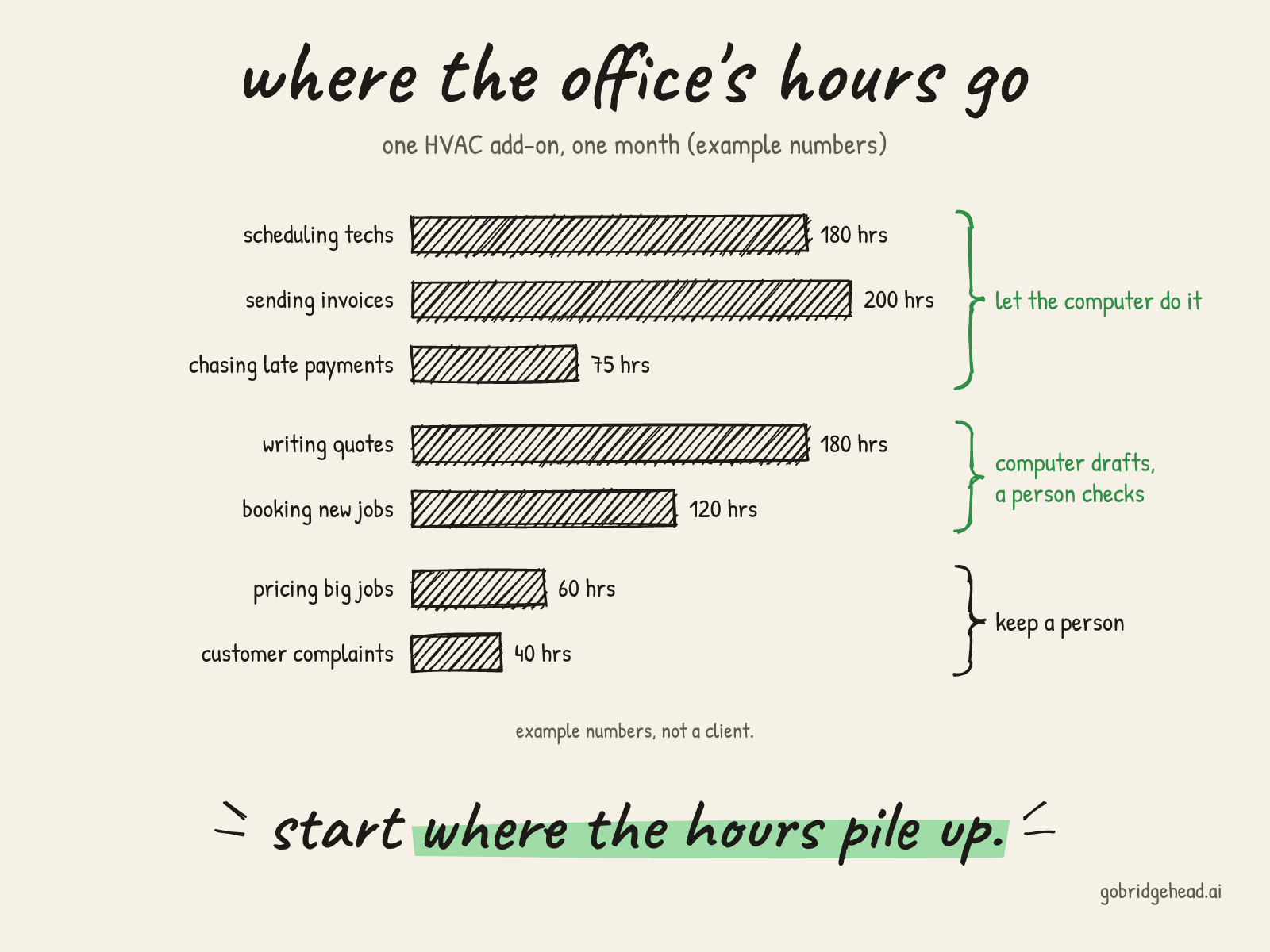
2 Where the office's hours go
You get these hours by sitting with the office for a week and timing the work. The company's software won't show them.
-
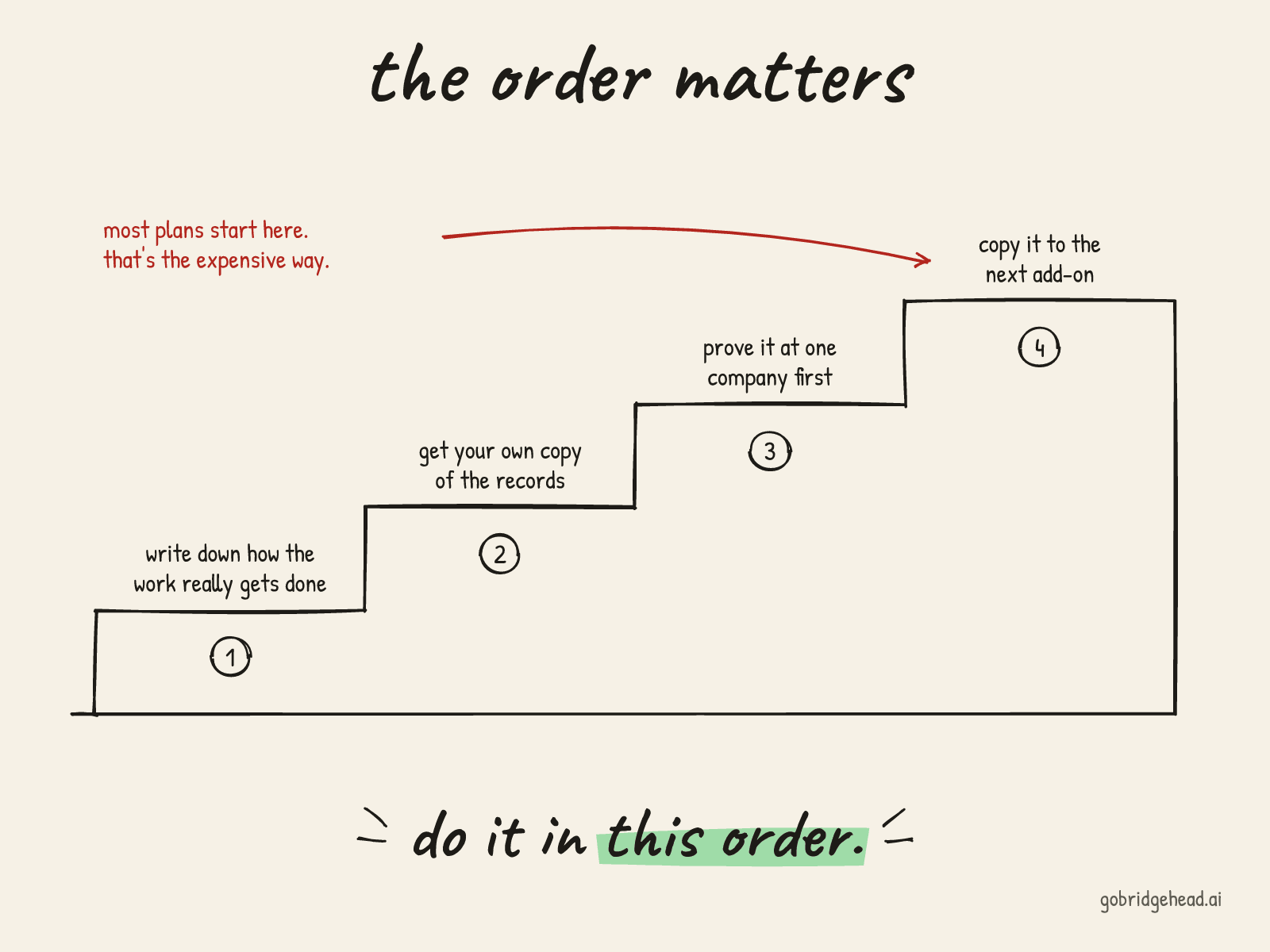
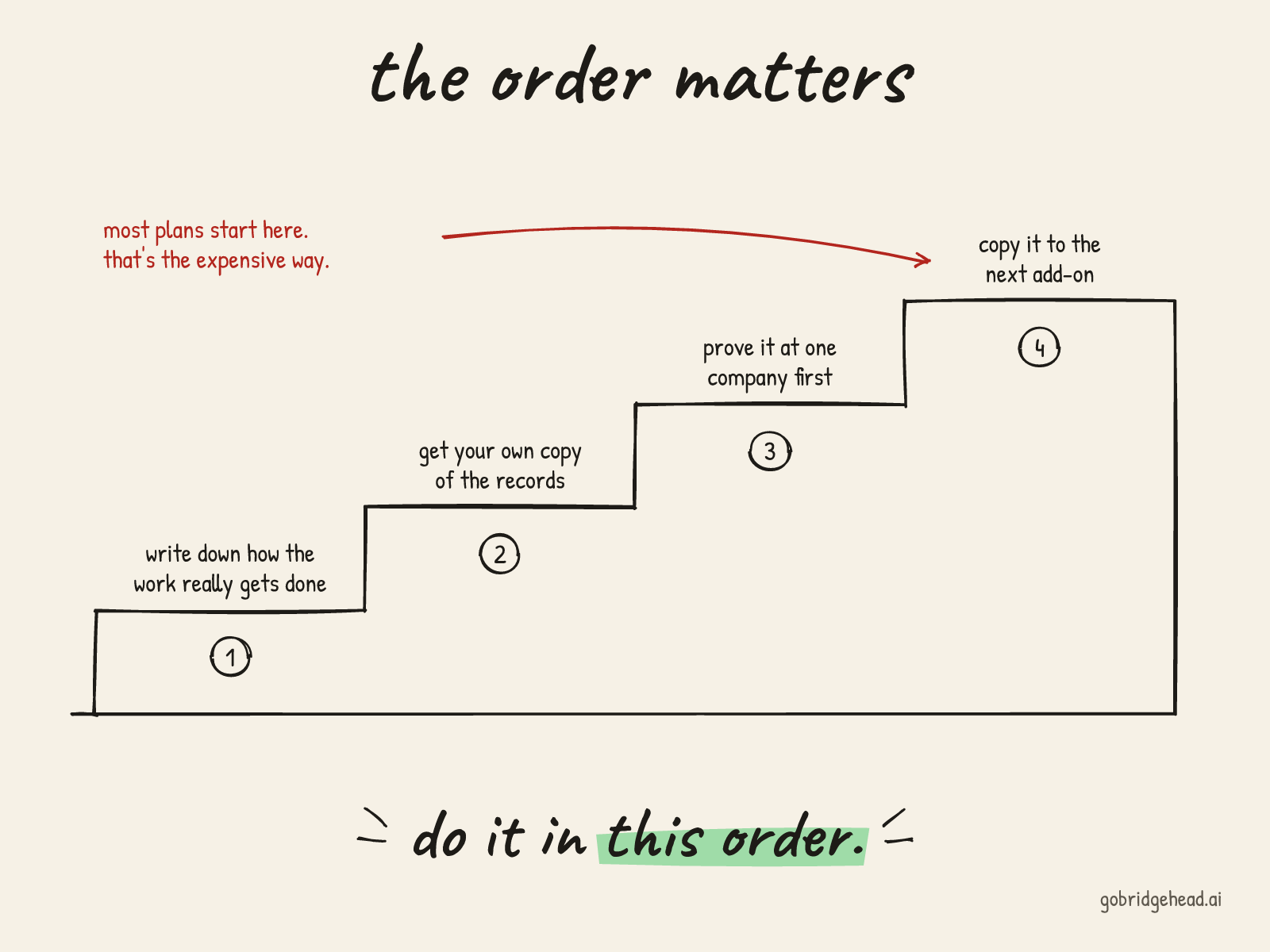
3 The order matters
Skipping to step four usually means buying one tool for every company. Without the notes from step one and the records from step two, that tool copies each company's old mistakes.
-
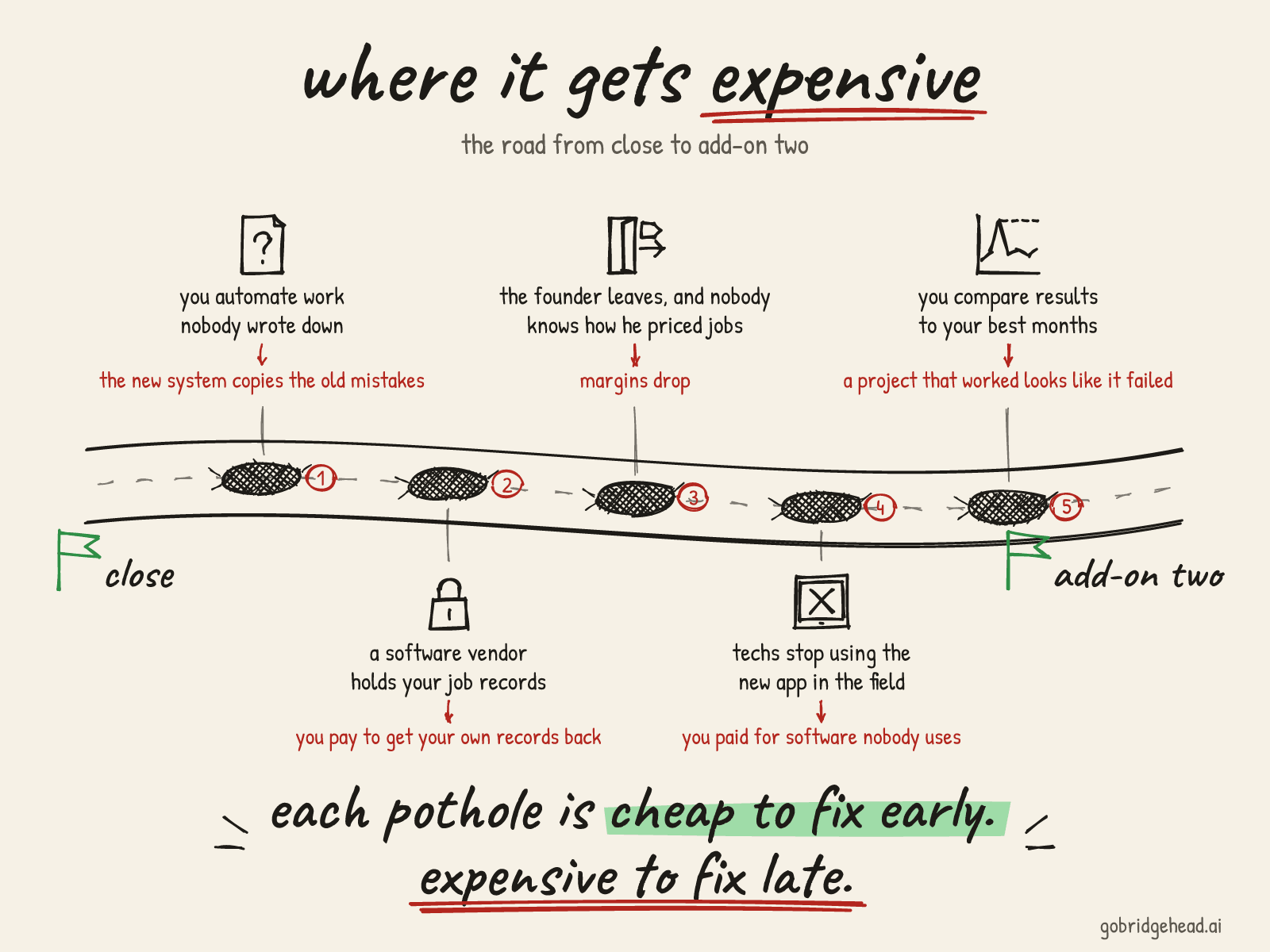
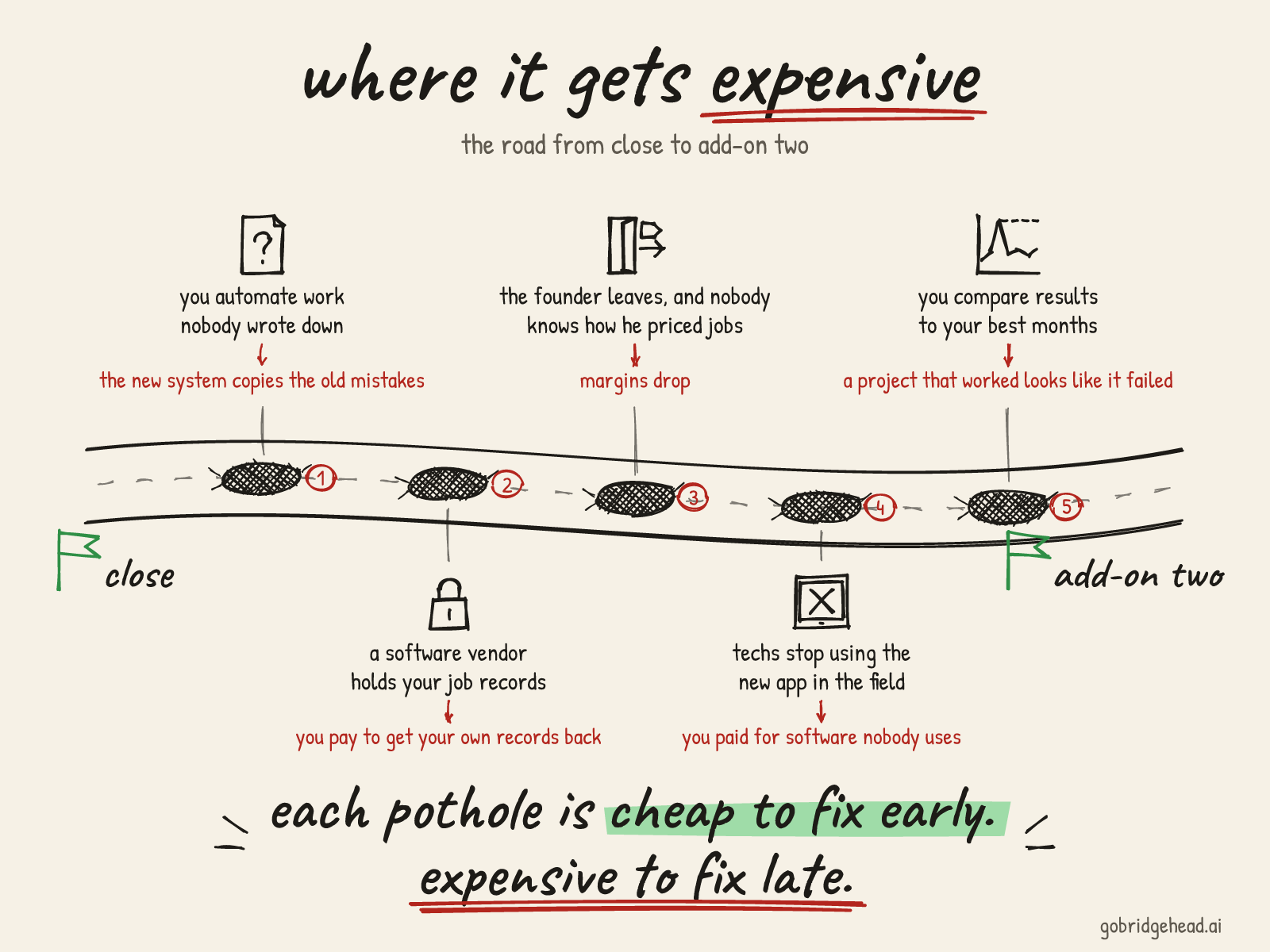
4 Where it gets expensive
None of these show up in the first month. They show up at add-on two, when you try to do it again and nobody can say how it was done the first time.
-
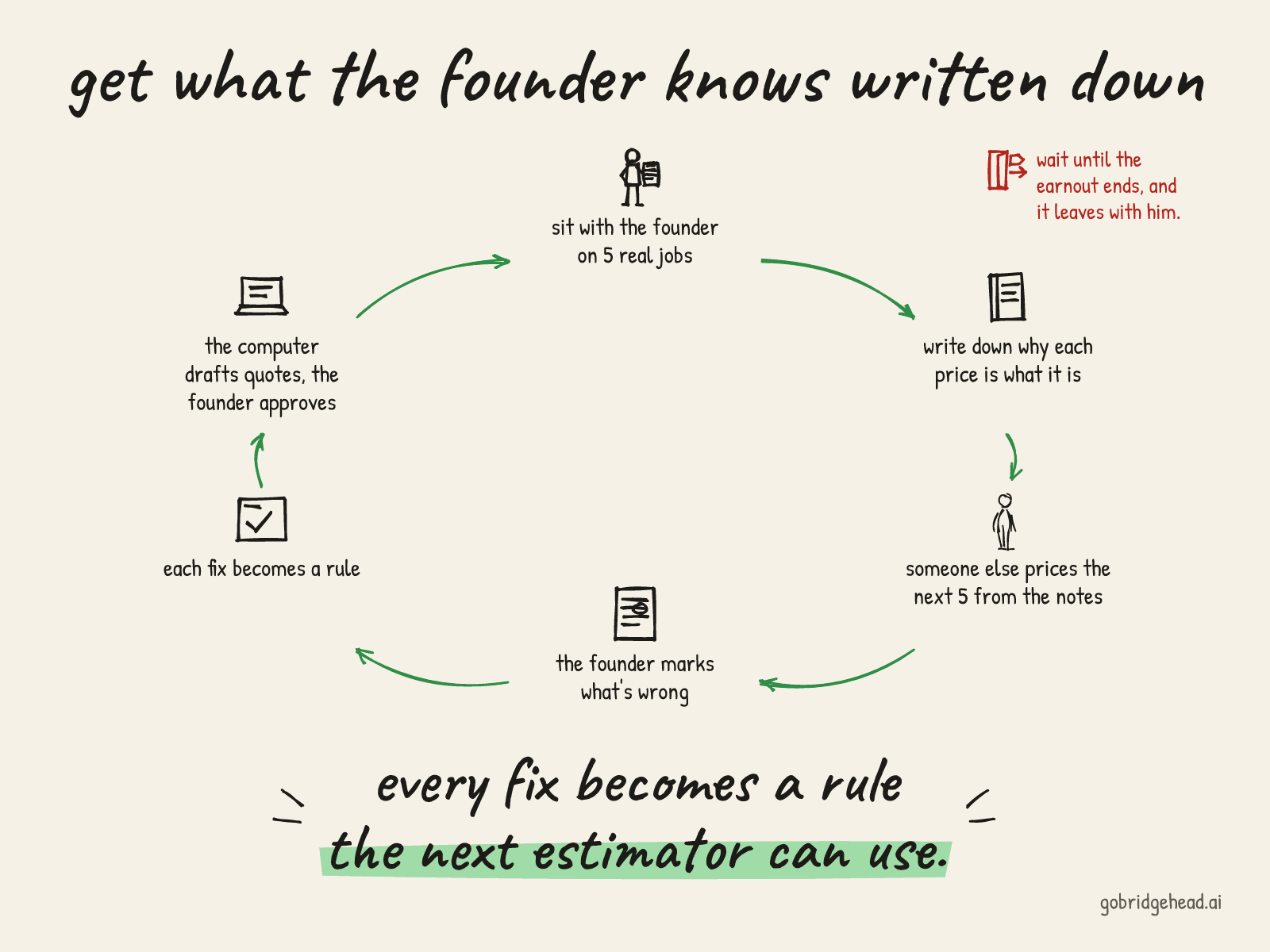
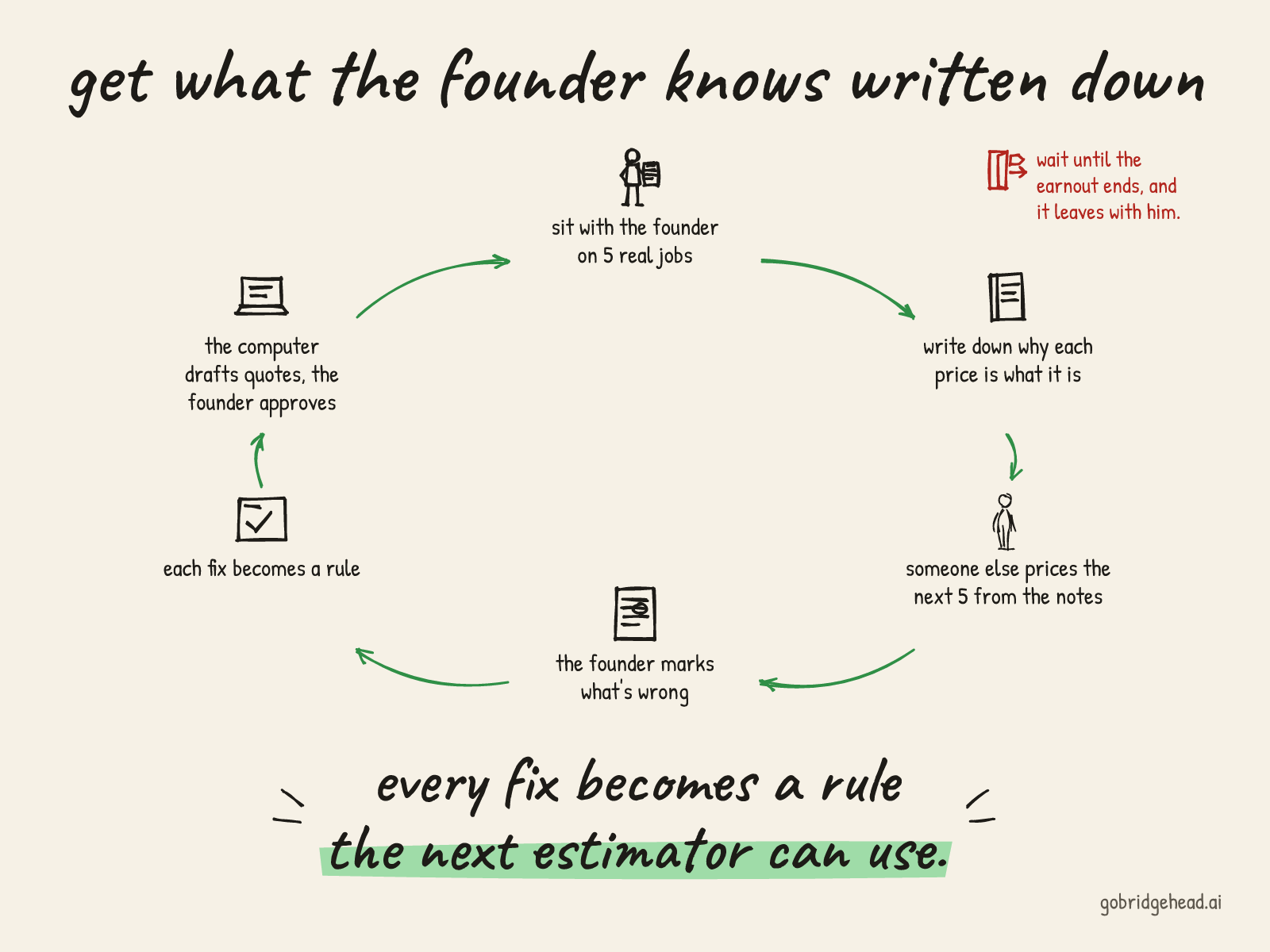
5 Get what the founder knows written down
Start in the first 90 days, while the earnout gives him a reason to help. Every rule he approves stays with the company after he leaves.
-
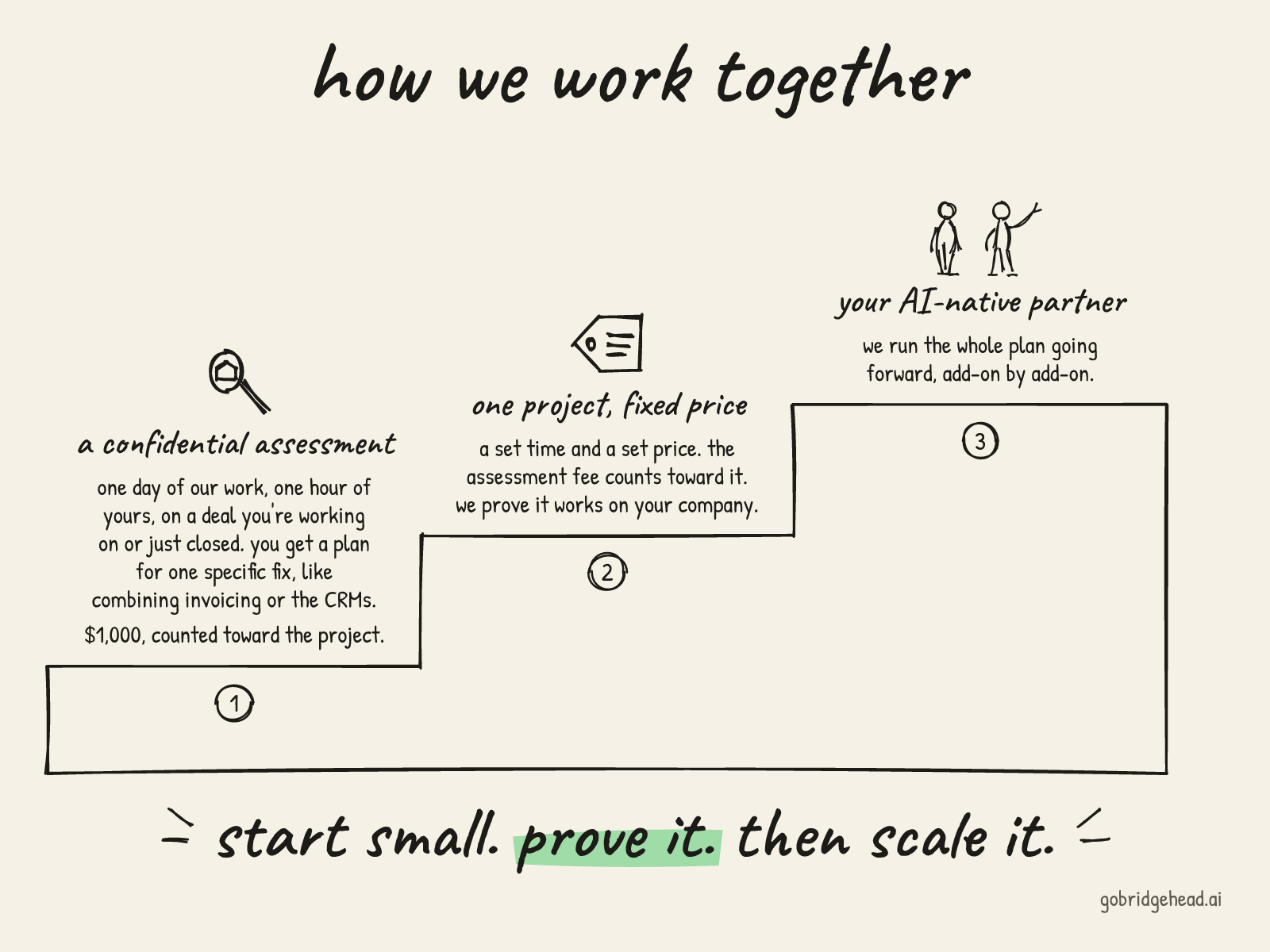
6 How we work together
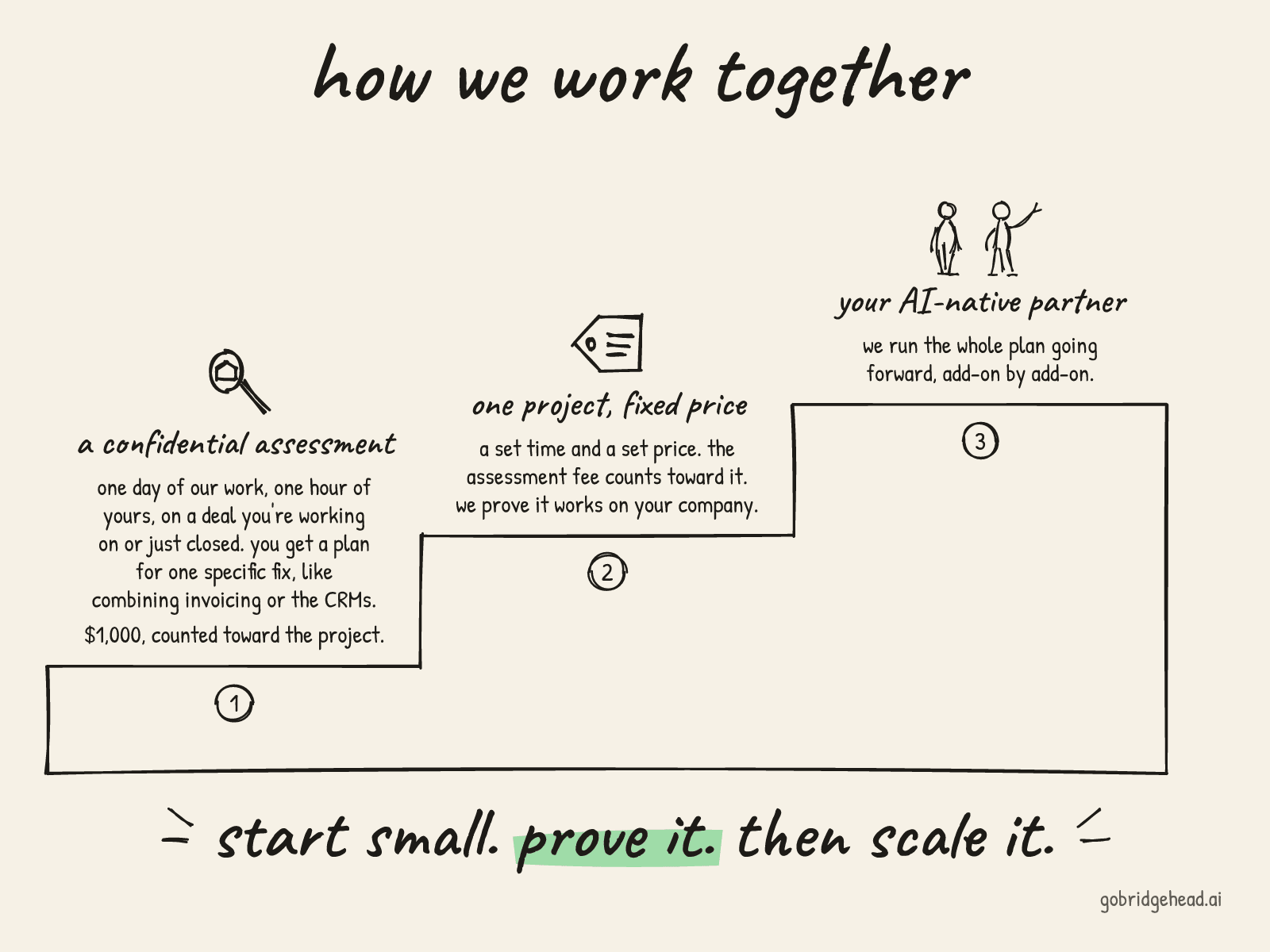
Start with a working session. You're interviewing us: we show you where the problems are, how we'd fix them and what it's worth against your own numbers. Then half up front, half when the first piece is delivered. Cancel anytime, no penalty. Nothing about your deal or your company leaves our team.
-
7 The math (example)
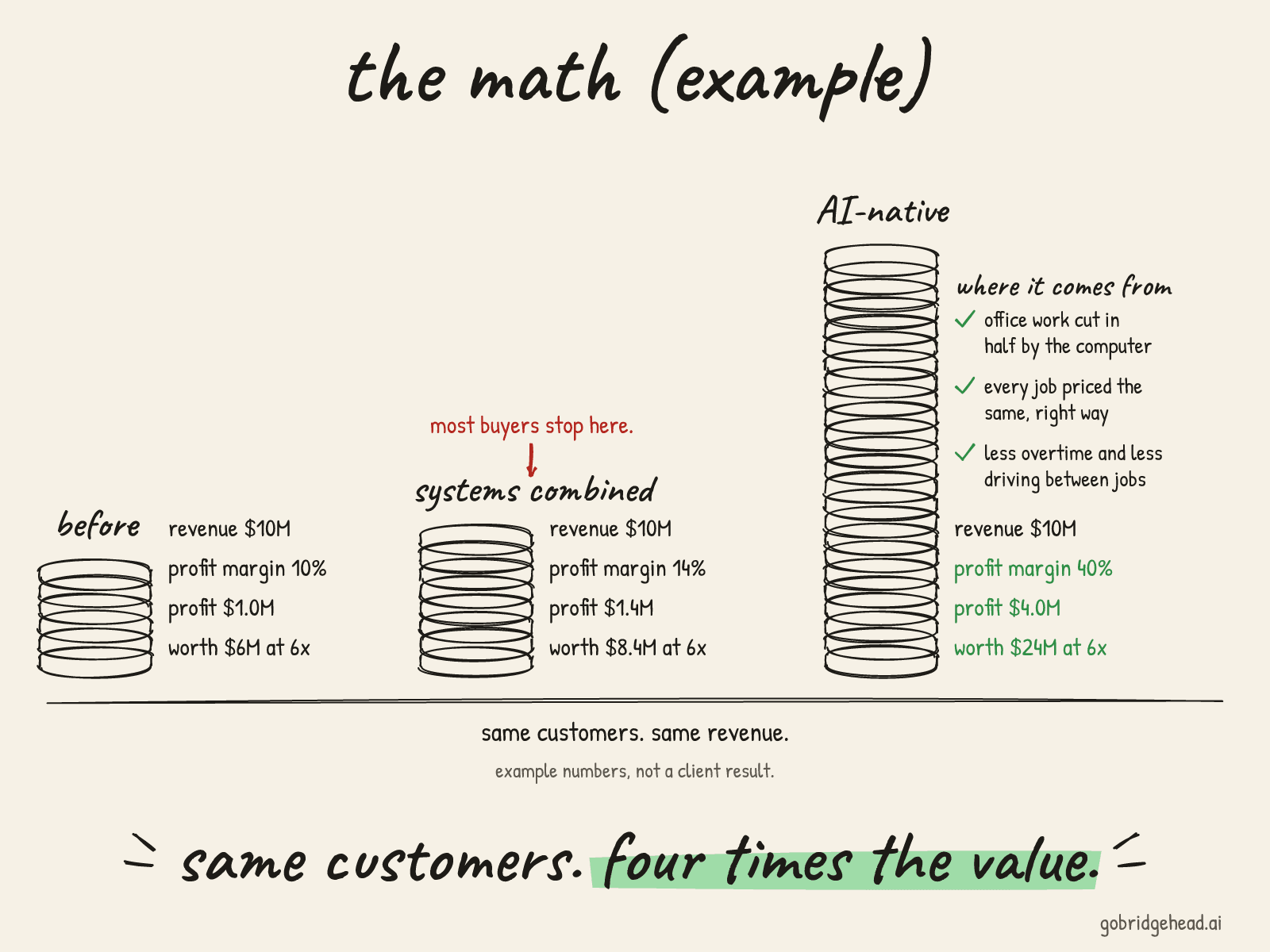
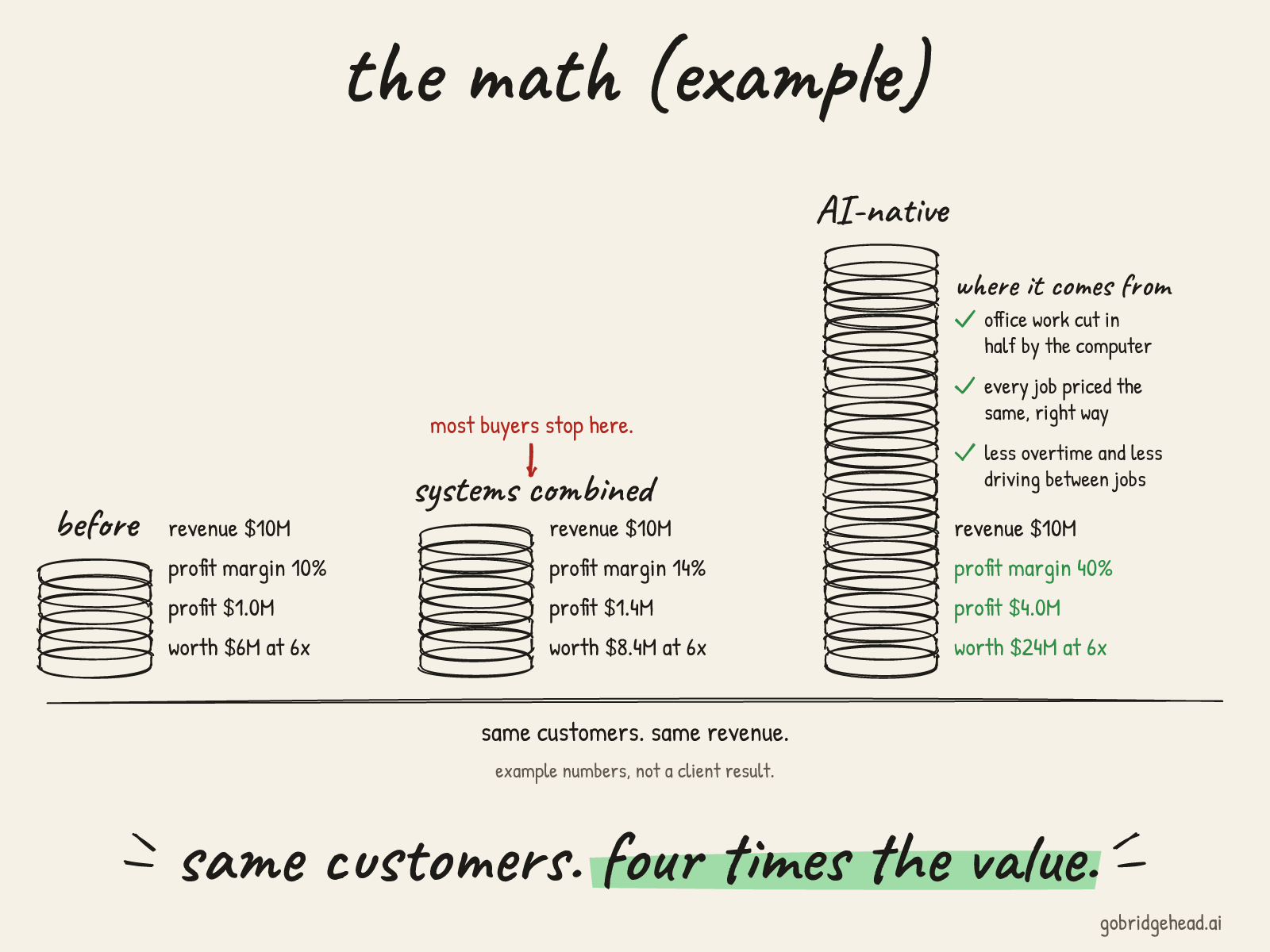
Example numbers, not a client result. Most of the gap is office work and how jobs get priced. Those are the first places we look on your company.
-
8 The weekly check-up
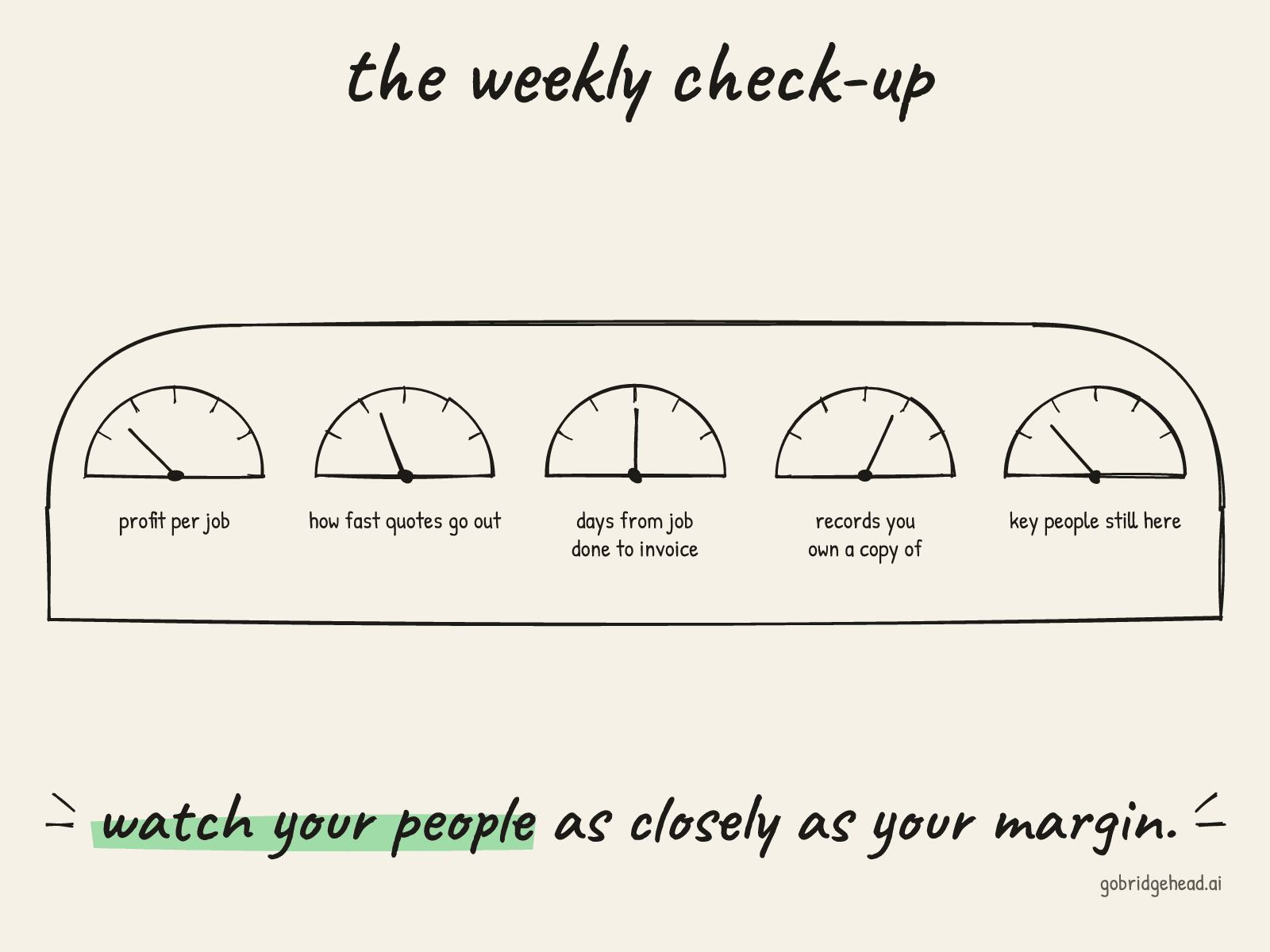
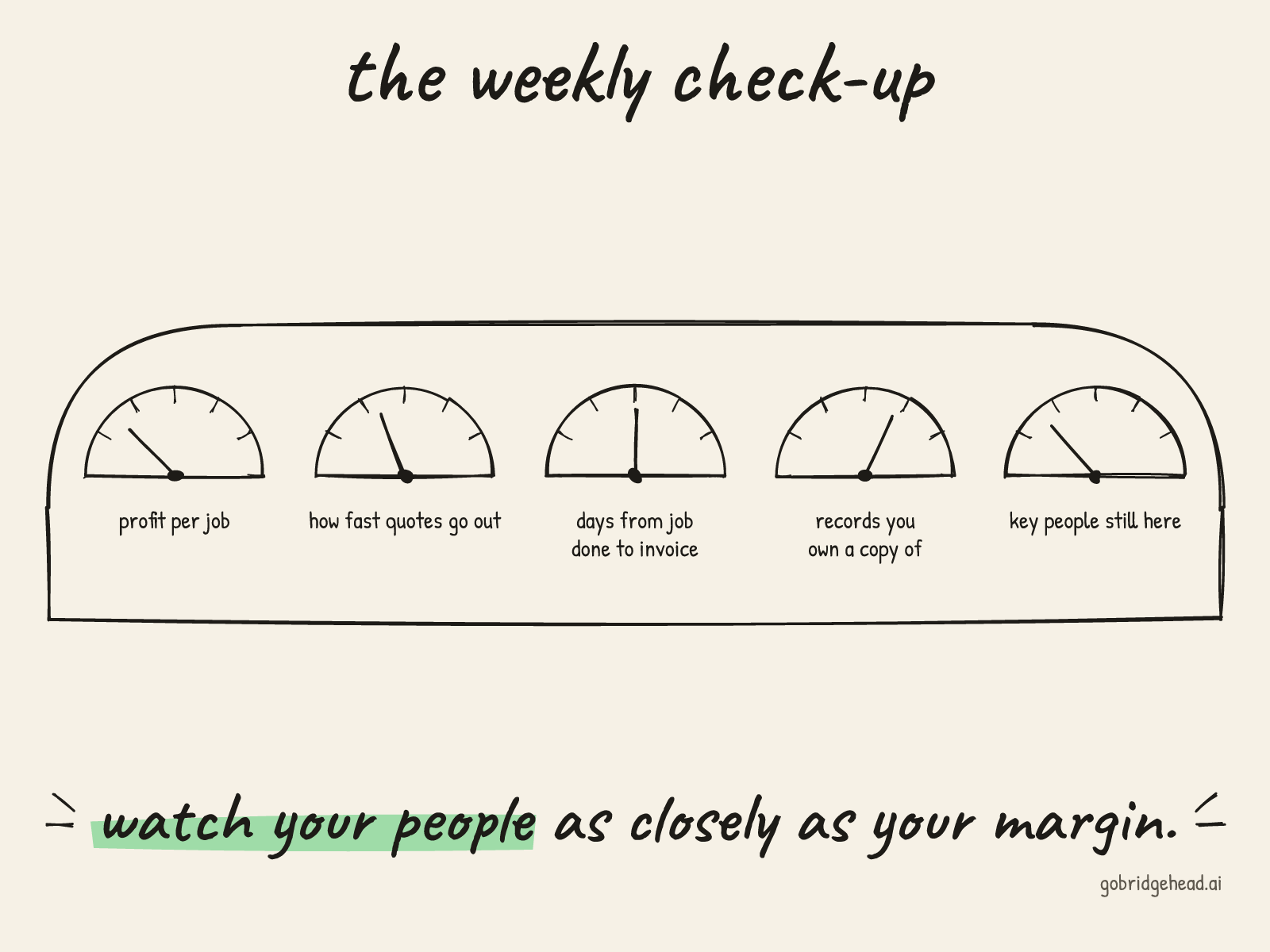
Every company reports the same five numbers every Monday, so you can compare add-ons side by side. If key people start leaving, a better margin won't last.
-
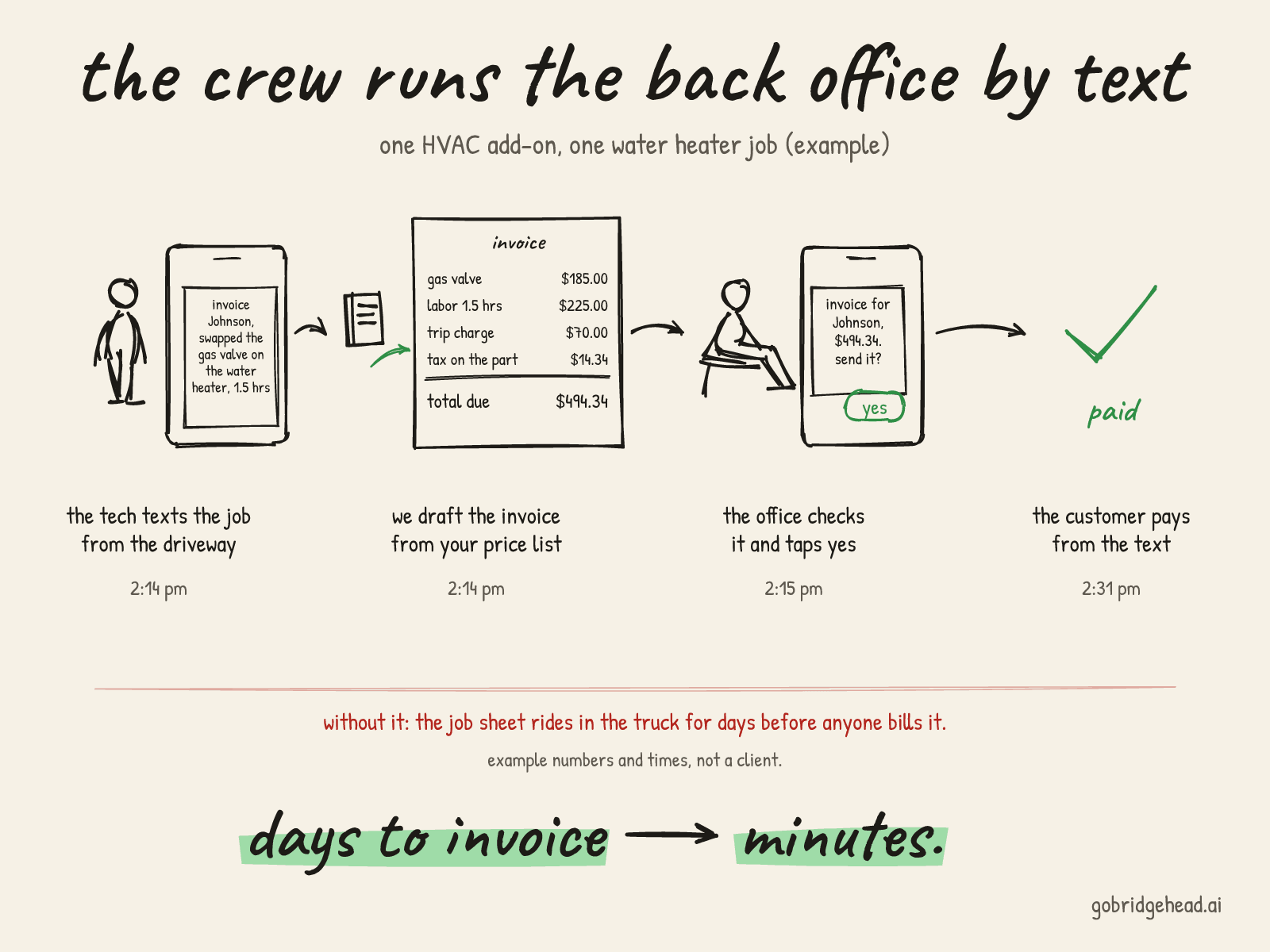
9 The crew runs the back office by text
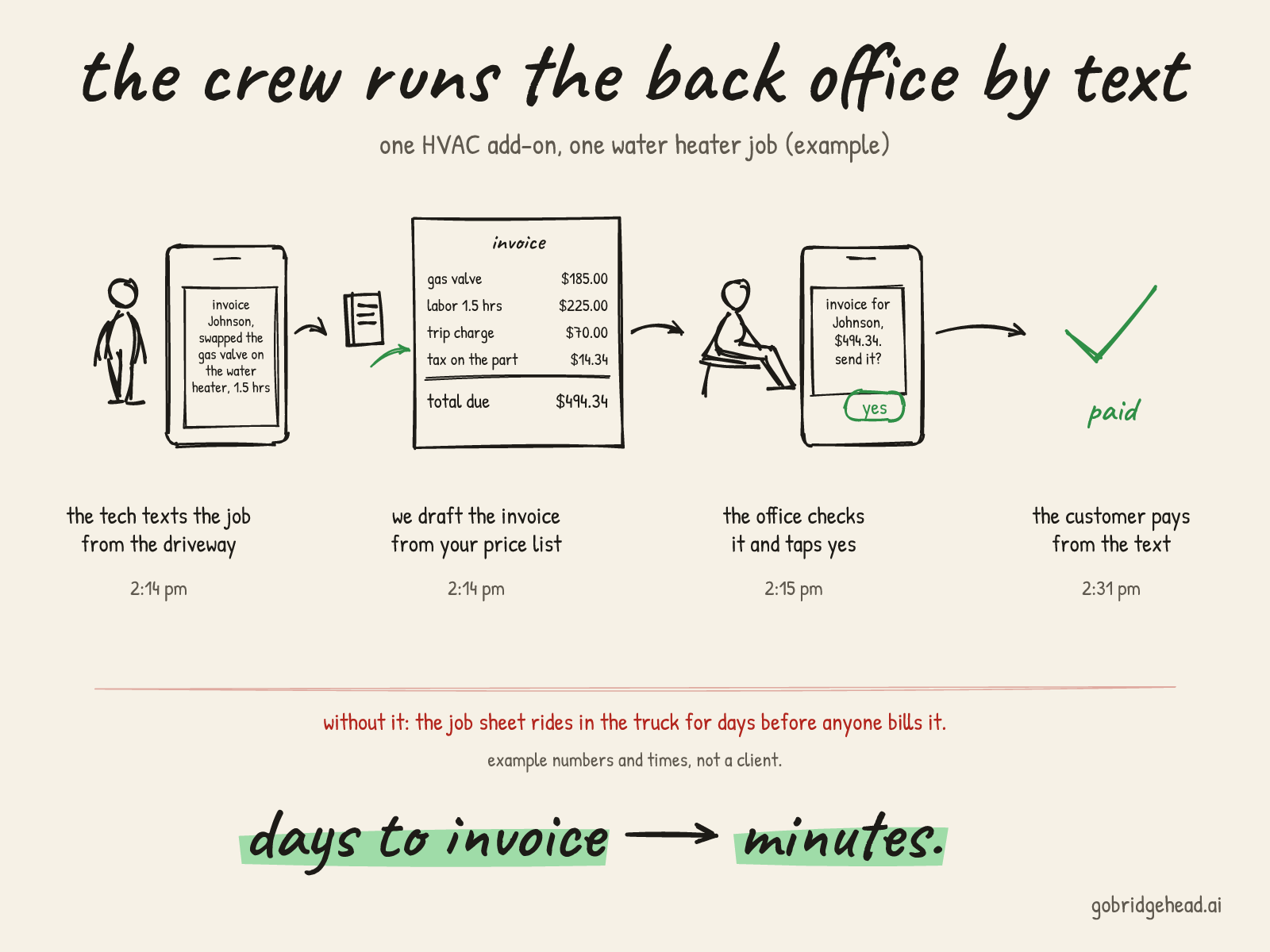
Your techs already text all day, so there's no new app for them to learn. The invoice comes from your own price list, and a person in the office still approves every one.
-
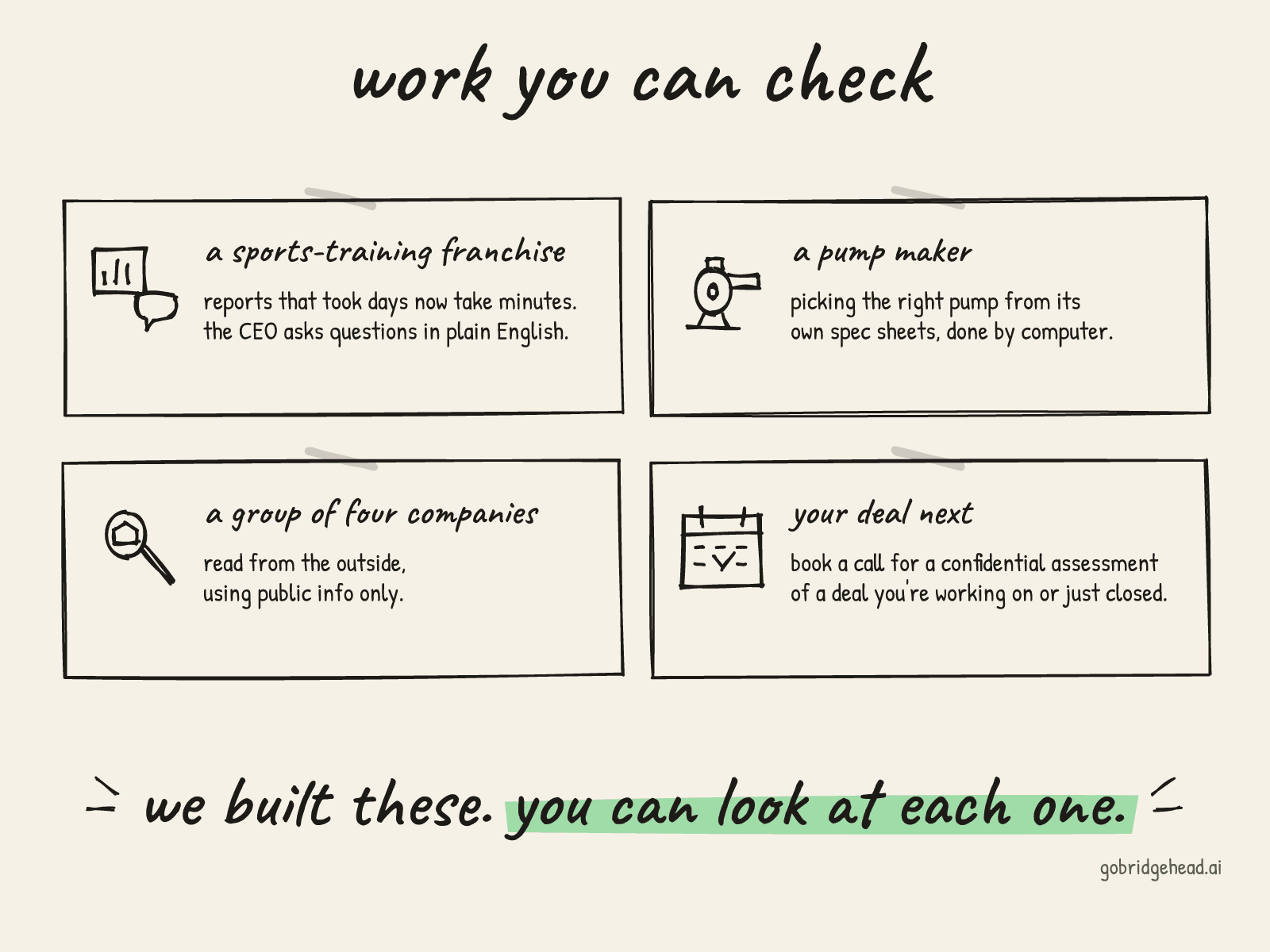
10 Work you can check
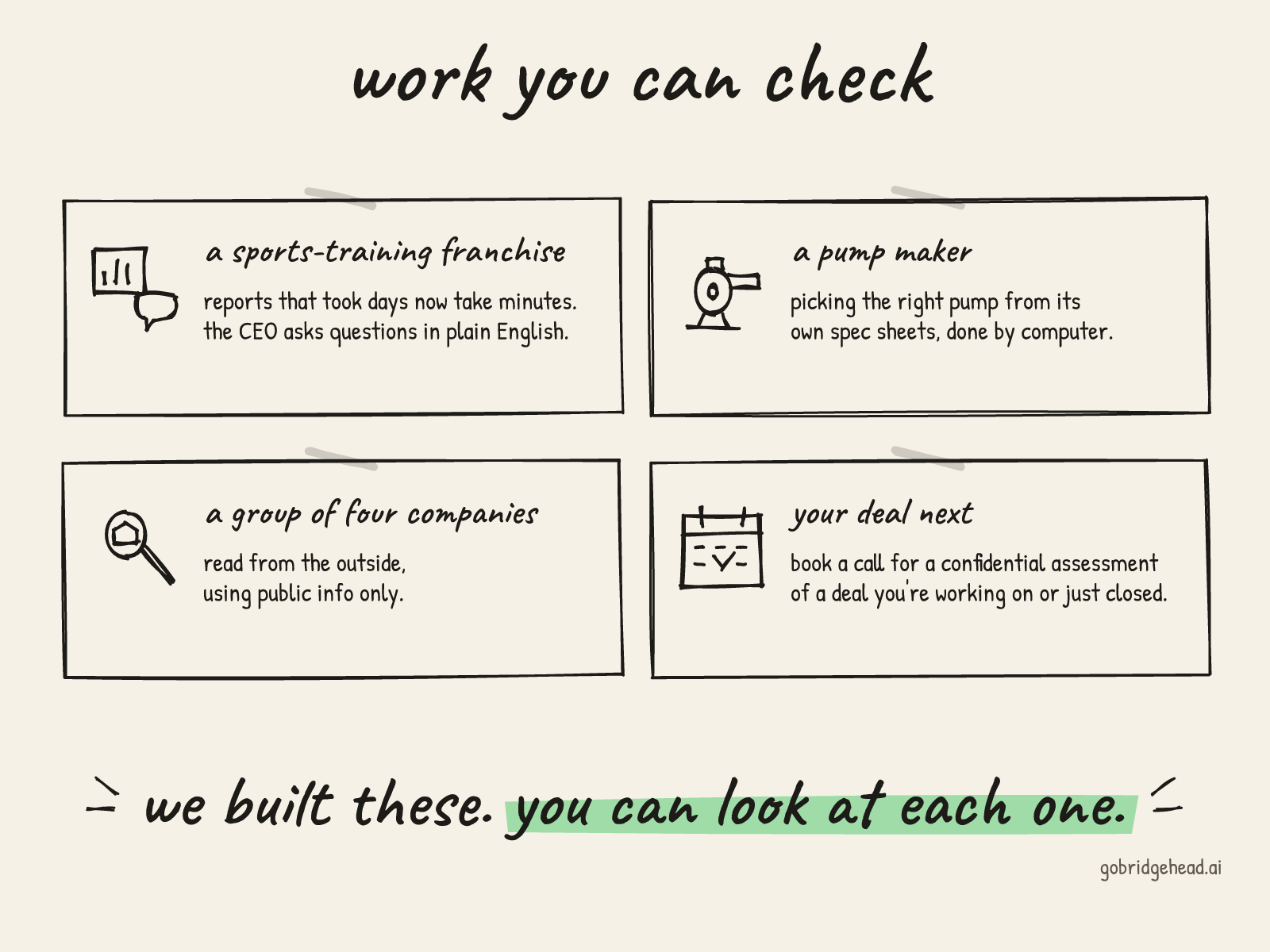
Names are removed. Here is the four-company read, start to finish.
Read the sample PDF, 4 pages
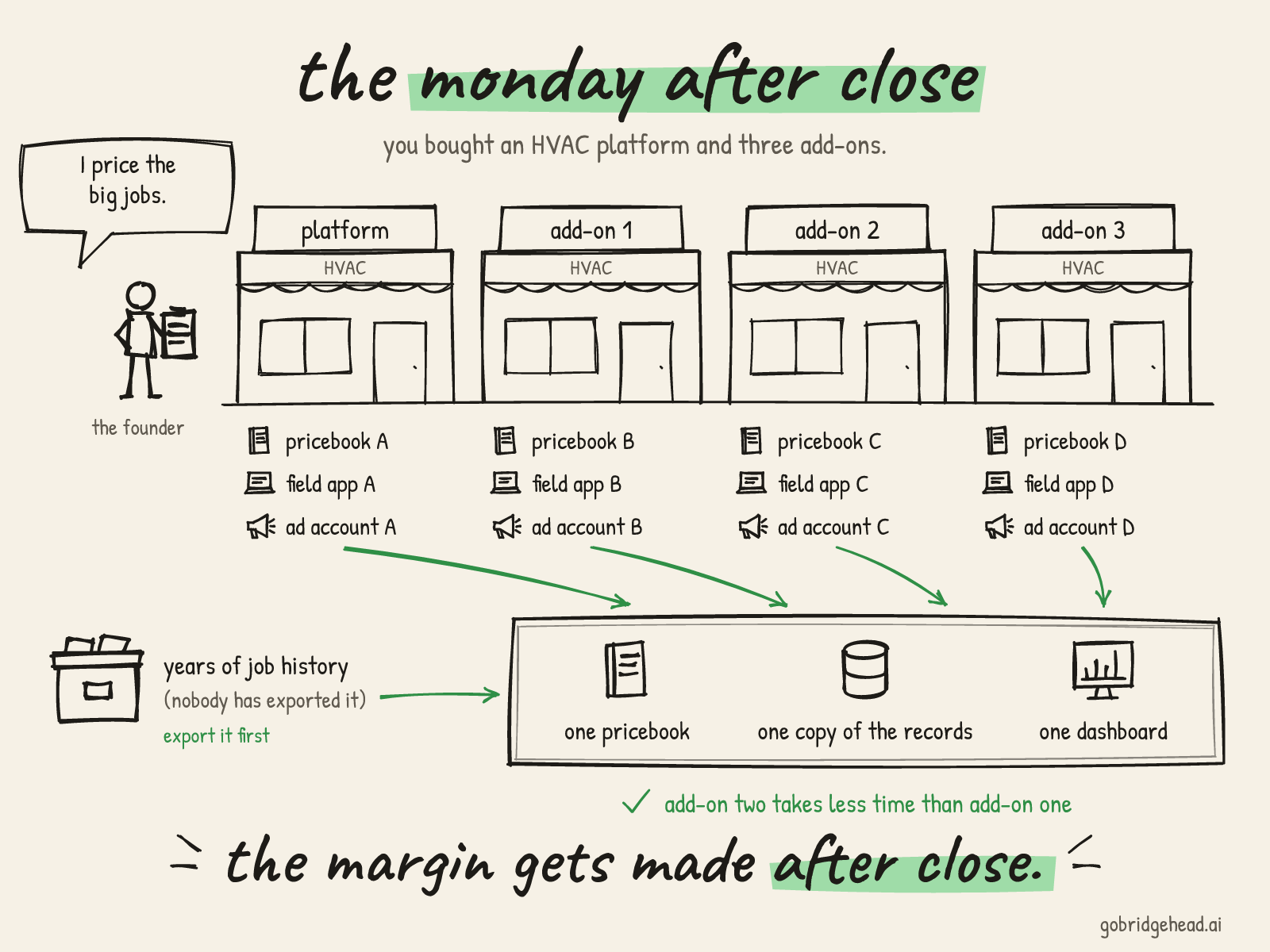
Each add-on gets easier than the last, because the notes, the records and the steps that worked carry over. Each one gets more profitable, because the margin work is already proven. That's the playbook.
If there's a fit, the next step is a confidential assessment: one day of our work, one hour of yours, $1,000, counted toward the project.
Background on Kash, our founder, if you want it.